SDOF - Forced Vibrations
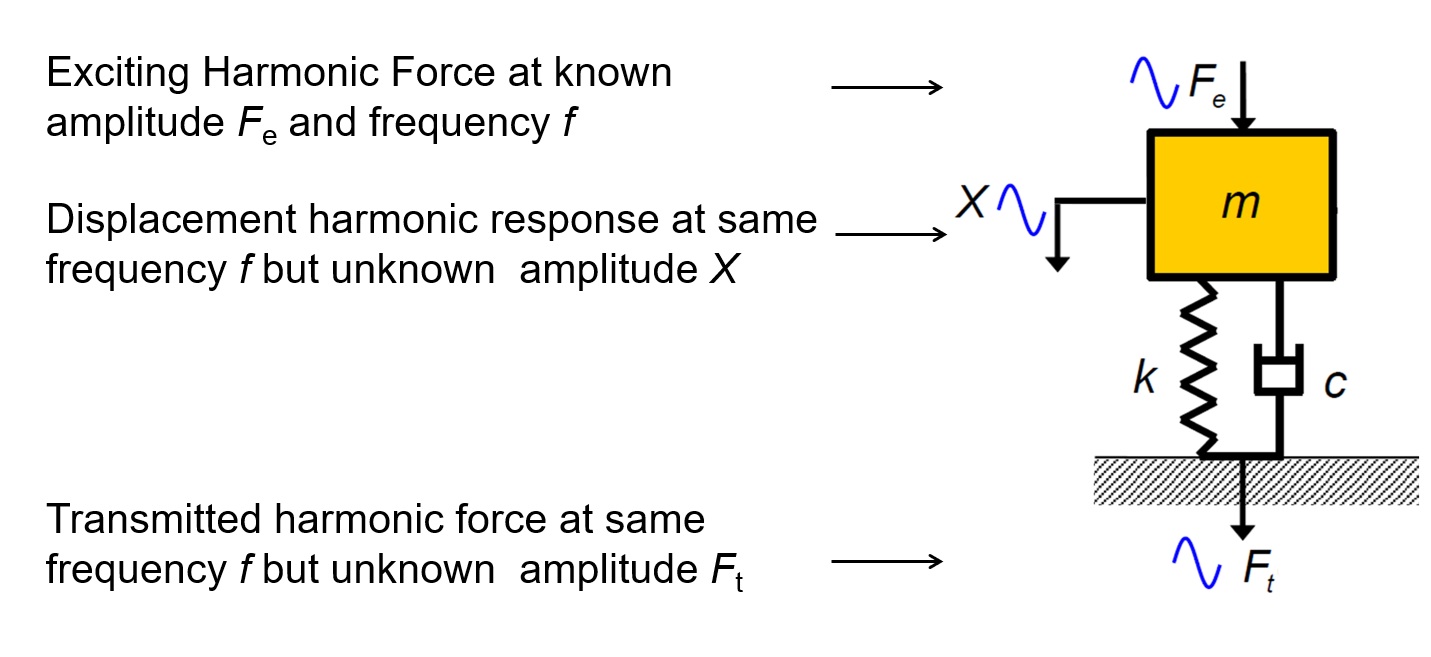
If the oscillating mass of an SDOF system is excited by a harmonic exciting force of known amplitude Fe and frequency f, after an initial transient, the displacement of the mass will also be harmonic at the same frequency f and with unknown amplitude X. The force transmitted to the foundation will also be harmonic, with the same frequency f and unknown amplitude Ft.
Goal of vibration isolation can be to minimize:
- The amplitude X of the suspended mass (Problem 1).
- The amplitude of the transmitted force Ft to the foundation (Problem 2).
Problem 1: Minimize mass displacement amplitude.
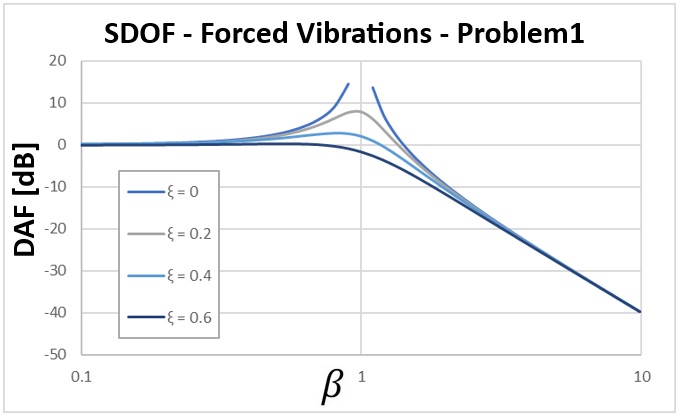
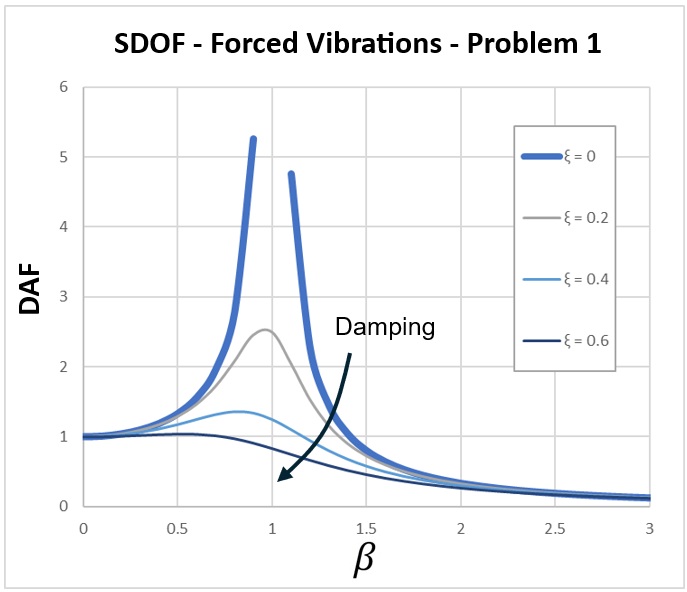
The ratio of mass displacement amplitude to static deflection defines the Displacement Amplification Factor (DAF), which is a non-dimensional quantity.

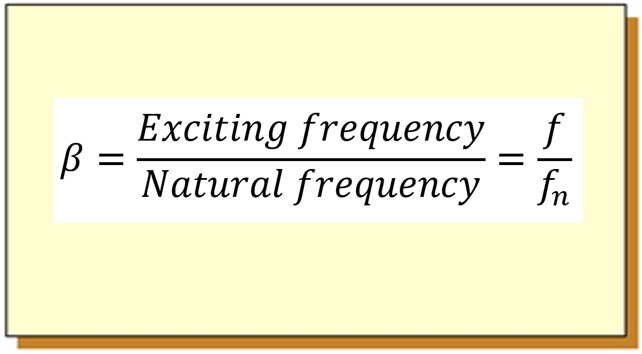
DAF varies as a function of the frequency ratio β and damping ratio 𝜁 according to the following chart:
Problem 2: Minimize transmitted force amplitude.
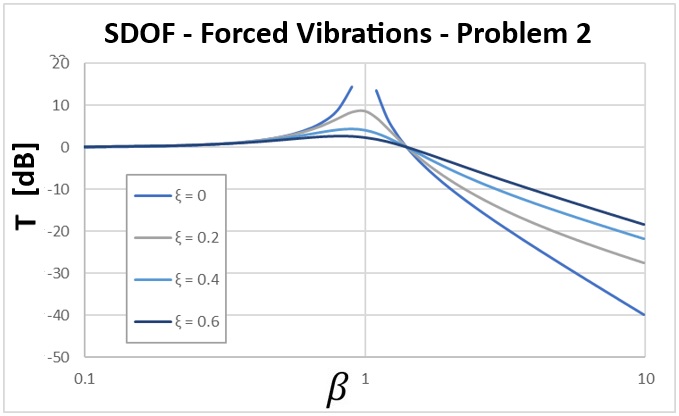
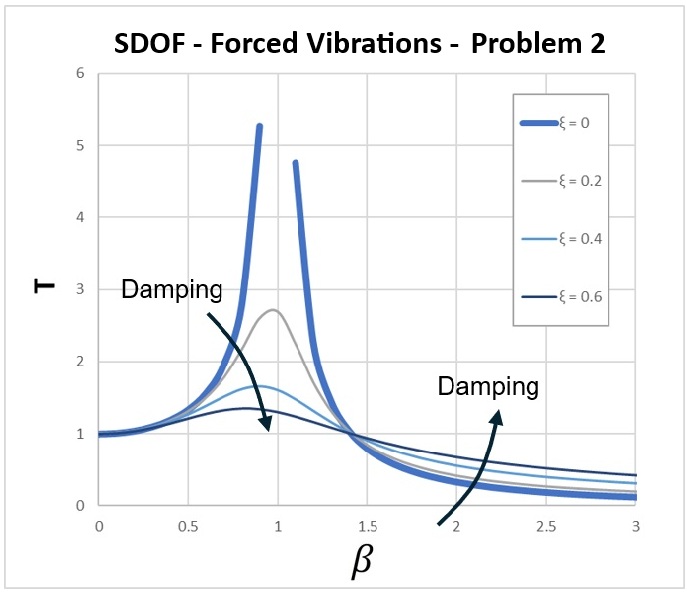
The ratio of transmitted force amplitude to exciting force amplitude defines the Force Transmissibility (T), which is also a non-dimensional quantity.

T varies as a function of the frequency ratio β and damping ratio 𝜁 according to the following chart:
We minimize both DAF and T at high frequency ratios (β >> 1). This suggests to calibrate mass and stiffness in order to have a natural frequency significantly smaller then the exciting frequency.
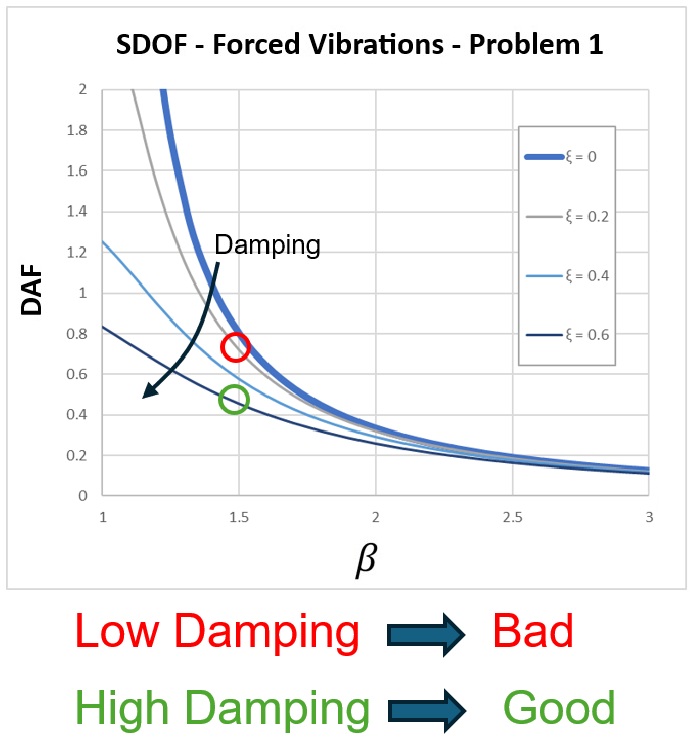
For both problems, the effect of damping is beneficial in crossing resonance (β = 1). However, whereas damping is helpful in minimizing DAF at high frequencies, it is detrimental in reducing T. This is better shown in the following diagrams:
Problem 1: Minimize mass displacement amplitude.
Problem 2: Minimize transmitted force amplitude.
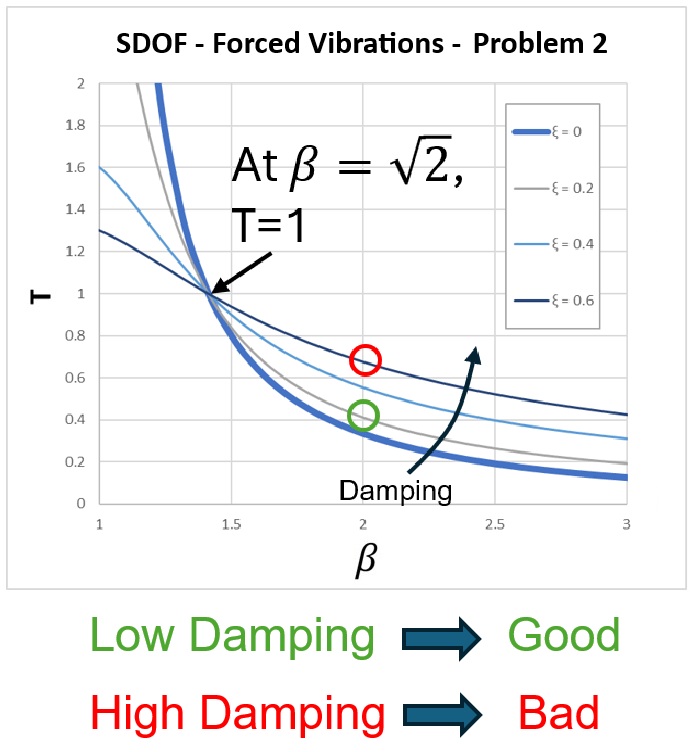
It is important to notice that in absence of damping (𝜁=0) DAF and T are represented by the same curve. Attenuation is achvied if β > √2:
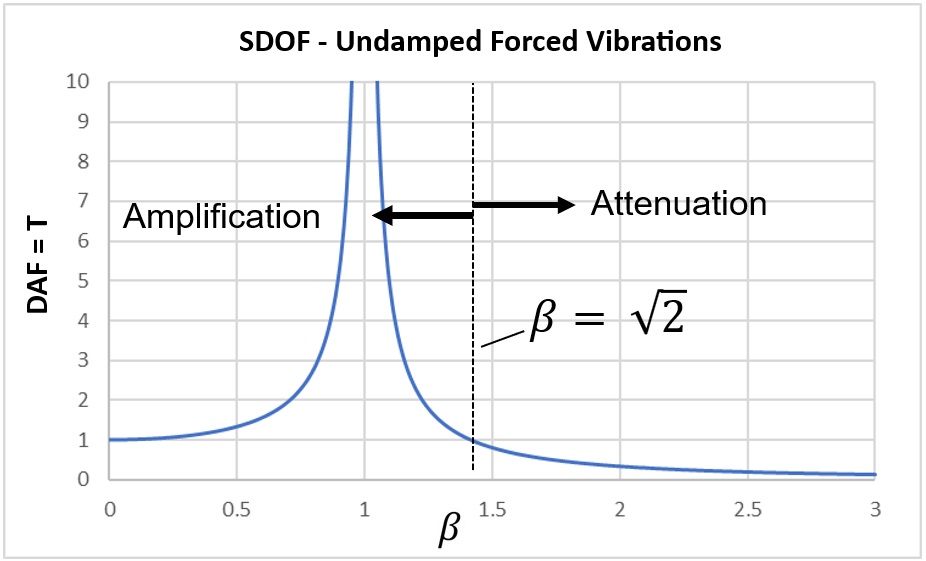
It is often convenient to express dimensionless quantities (such as force transmissibility or displacement amplification factor) in decibels [dB]. While the formal definition of decibels uses 10·log₁₀(·), vibration theory traditionally adopts 20·log₁₀(·) due to energy considerations and historical practice. Adopting [dB] values and switching to logarithmic scale for the frequency ratio β the following chart is obtained:
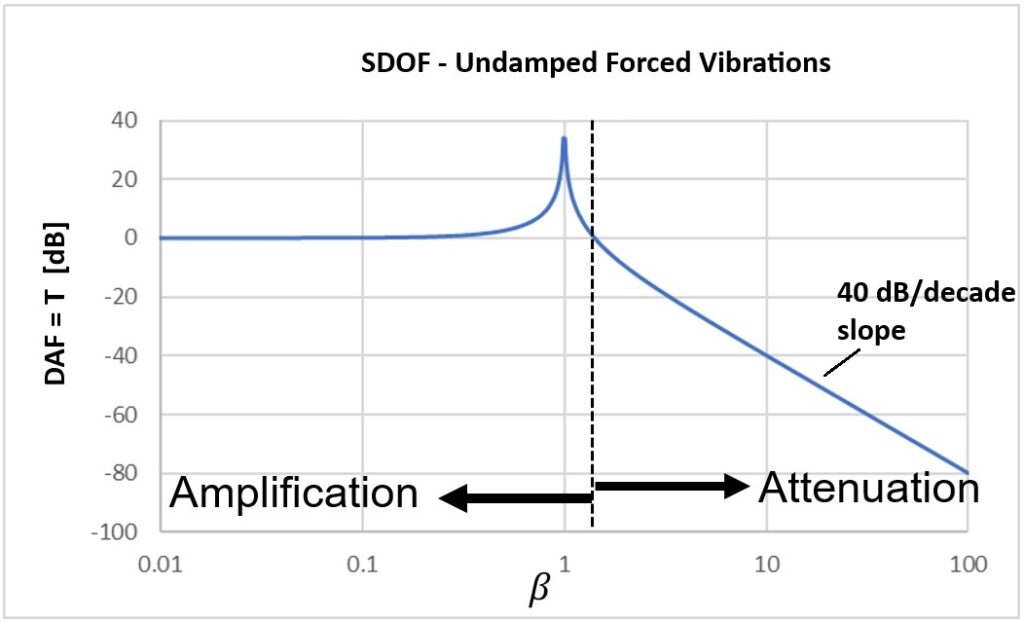
The effect of damping on Displacement Amplification Factor and force Transmissibility is better visualized by adopting the bi-logarithmic format, as shown in the following charts: